
Tailoring · 8 min read
The Geometry of a Perfect Shoulder
The shoulder is the spine of the jacket — the one line a tailor cannot fix later.
Listen to this article (8 mins)
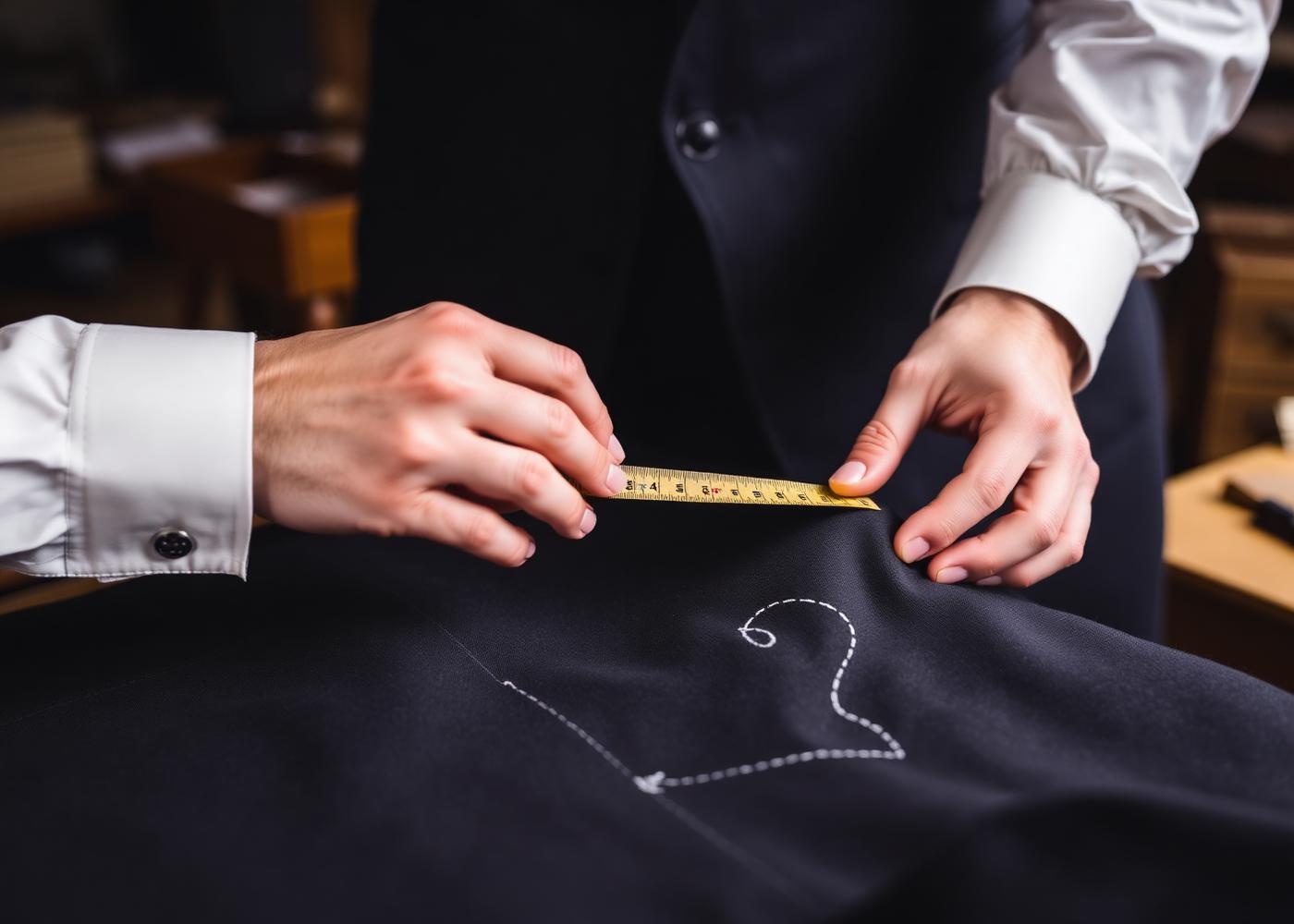
When you look at a well-dressed man, your eyes don't instantly jump to his jacket's fabric or its buttons. Instead, your brain unconsciously registers his silhouette. In tailoring, that silhouette is entirely dictated by one structural foundation: the shoulder line.
The shoulder is the spine of the jacket. If the waist is too loose, a tailor can take it in. If the sleeves are too long, they can be shortened. But if the shoulder structure is wrong, the garment is fundamentally broken.
To build a confident, authoritative frame, you must understand the geometry behind the perfect shoulder — and choose the construction that fits your body type.
1. The Structured Shoulder (The British School)
The traditional British padded shoulder is designed to create an idealized, military-inspired shape.
- The Construction. Internal padding, canvas, and structured shoulder pads create a crisp, sharp, and extended line. The fabric cuts sharply at the edge, dropping into a clean vertical sleeve.
- The Visual Effect. Adds visual weight to your upper body, widens narrow shoulders, and squares off a slouched posture.
- The Vibe. High authority, formal, commanding. Perfect for boardrooms and formal evening attire.
2. The Neapolitan Shoulder (The Italian School)
At the opposite end of the geometric spectrum sits the soft, unpadded shoulder born in Naples, Italy — often referred to as Spalla Camicia (shirt shoulder).
- The Construction. Zero shoulder padding. The jacket fabric is stitched directly under the shoulder bone, mimicking the natural drape of a shirt. It often features tiny pleats (grinzano) at the seam where the sleeve meets the armhole.
- The Visual Effect. Follows the exact anatomy of your body. Relaxes the frame, eliminates stiffness, and highlights a natural athletic build.
- The Vibe. Effortless elegance, casual sophistication, and high-status comfort — the epitome of Sprezzatura and Quiet Luxury.
The Tailoring Check: The "Shoulder Divot"
The absolute geometric rule of a well-fitted shoulder is the absence of the dreaded shoulder divot.
“If a jacket is too large in the shoulders, the fabric collapses inward right below the shoulder seam — creating an ugly dent on your upper arm. If it is too small, the shoulder bunches up into horizontal tension lines.”
The seam of the jacket should lie perfectly flat and end precisely where your natural shoulder bone begins to curve down into your arm. No overlap. No collapsing.