
Detail · 5 min read
Cufflinks — The Last Quiet Flourish
At the wrists, true personal discretion is revealed.
Listen to this article (5 mins)
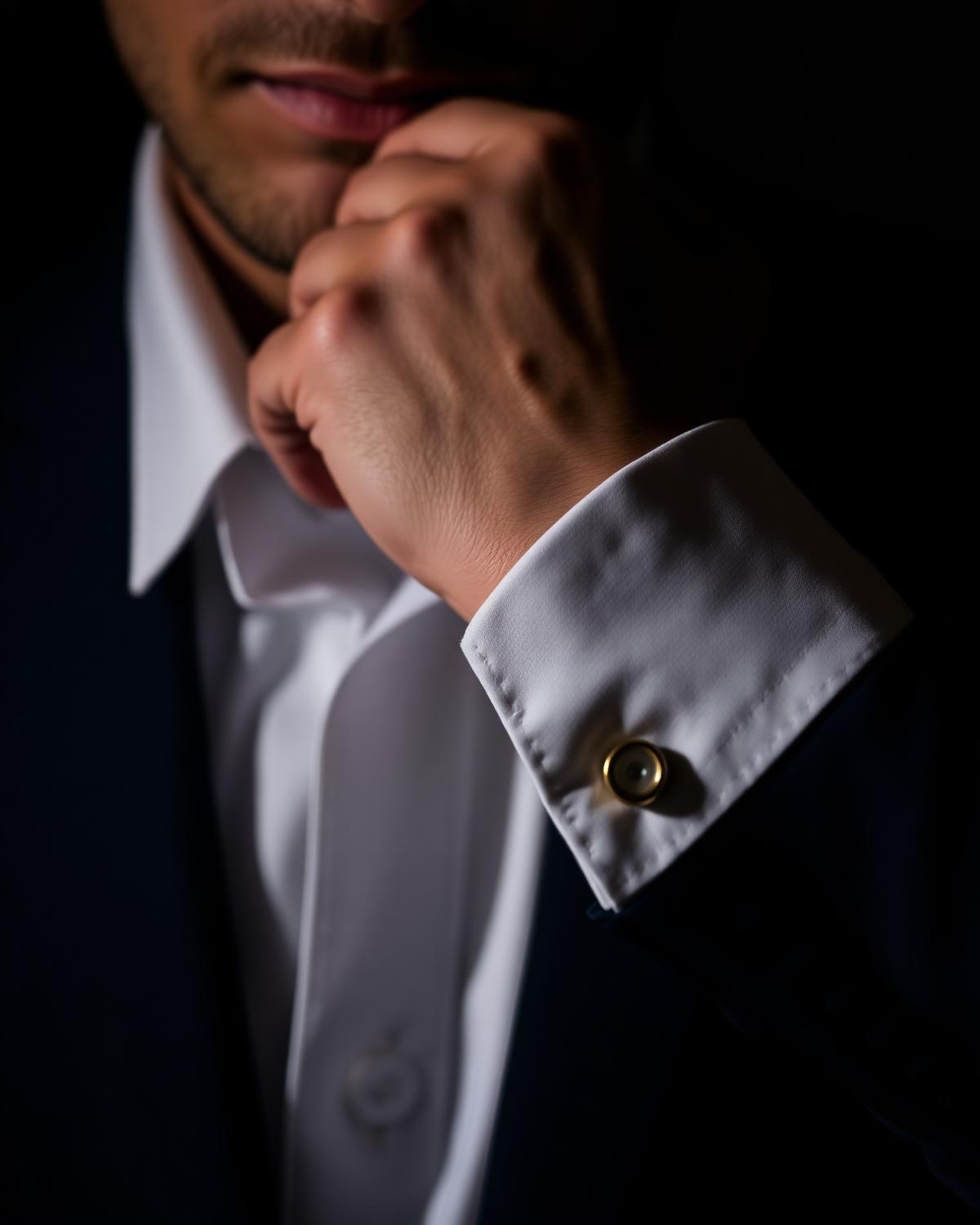
In the architecture of a gentleman's wardrobe, the minor details often carry the heaviest weight. While a jacket frames the torso and a tie anchors the chest, it is at the wrists where true personal discretion is revealed. Cufflinks are not mere fasteners; they are the ultimate exclamation point of a tailored look — a final, quiet flourish.
When entering the world of high-end tailoring, knowing how and when to introduce this subtle touch of metal or fabric separates the merely dressed from the truly refined.
1. The Foundation (The French Cuff Shirt)
Before discussing the accessory itself, one must understand the canvas. Cufflinks require a specific type of shirt: the French cuff — or double cuff — shirt.
- The Construction. Unlike a standard barrel cuff that fastens with a button, a French cuff is twice as long and folds back on itself. It features symmetrical holes — no buttons — designed strictly to be held together by a cufflink.
- The Standard. It should peek out exactly 1 to 1.5 centimetres below your jacket sleeve. Cufflinks stay hidden while your arms are at your sides, only revealing themselves subtly as you move, reach, or sit.
2. The Philosophy of Metal (Keep It Muted)
The golden rule of quiet luxury is to avoid loud, oversized, or novelty cufflinks — tiny sports cars, dice, slogans. Your hardware should whisper, not shout.
- Metal Matching. Cufflinks must harmonise with the other metals you wear. Stainless steel or white-gold watch → silver-toned cufflinks. Gold watch or buckle → gold cufflinks. Never mix.
- Materials of Discretion. Look for understated classics: solid sterling silver, brushed platinum, mother-of-pearl, onyx, or subtle lapis lazuli inserts. Depth without harsh reflection.
- Silk Knots. For business-casual settings, replace metal with classic elastic silk knots (Monkey's Fists). A touch of colour and texture without the formality of precious metals.
The Anatomy of Cufflink Types
| Type | Character |
|---|---|
| T-Bar / Bullet Back | The most common, easiest to insert. A small cylinder toggles sideways to lock the cuff. |
| Fixed Back / Button | A solid piece of metal with no moving parts. More traditional, elegant, and beautiful from both sides of the cuff. |
| Chain Link | The pinnacle of classic tailoring. Two decorative faces joined by a tiny chain — creating a softer, more relaxed drape at the wrist. |
“Elegance is achieved not when there is nothing more to add, but when there is nothing left to take away.”— Antoine de Saint-Exupéry
Ultimately, cufflinks should feel like a natural extension of your style — not a costume. Chosen with restraint, they serve as a quiet nod to craftsmanship and tradition.